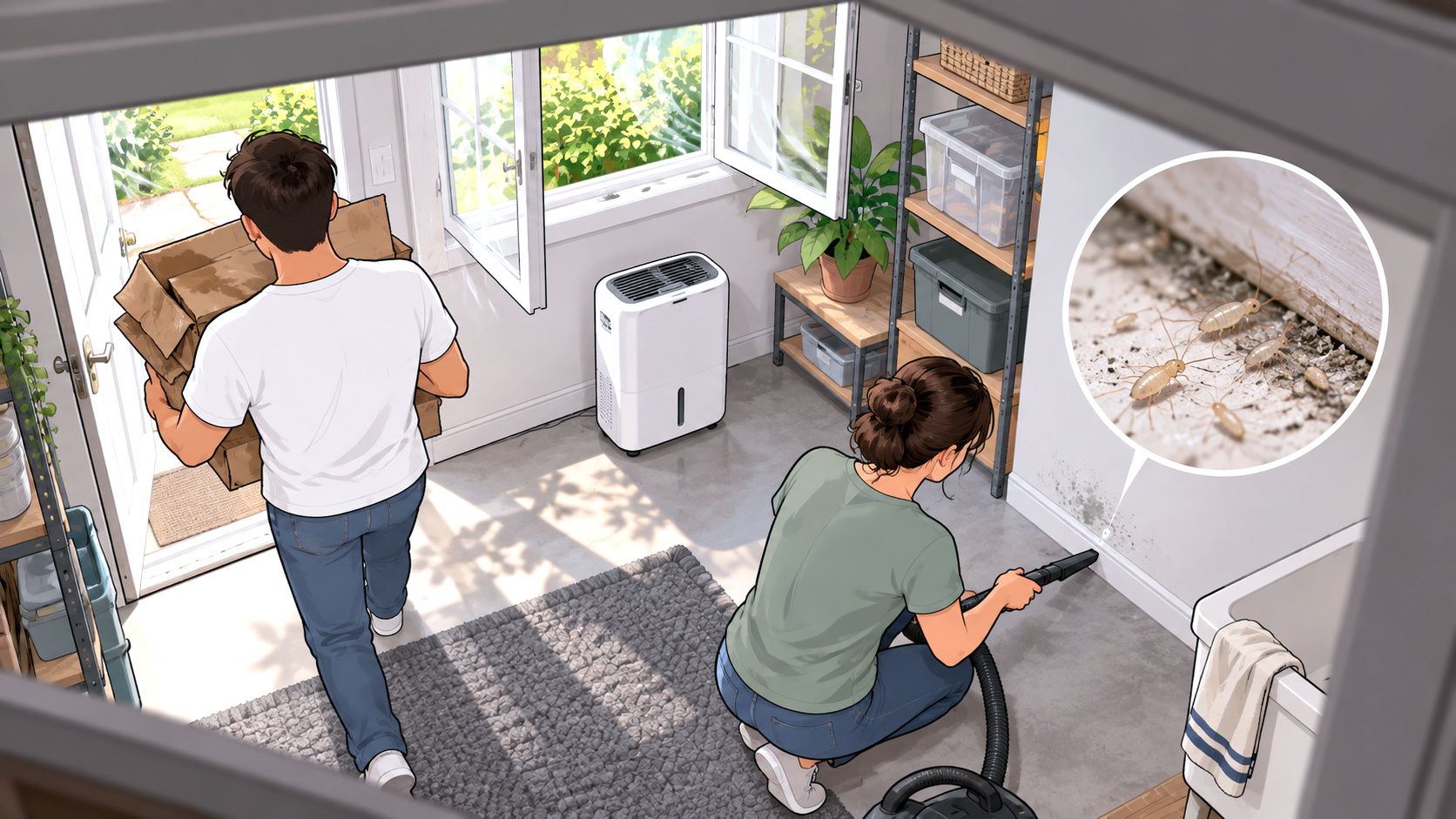
Booklice are one of the household pests for which natural control is not a compromise. You do not need to replace an effective pesticide program with vinegar, essential oils, or another homemade spray. The standard approach to booklice already centers on changing the environment that allows them to survive.
To get rid of booklice naturally, keep relative humidity below about 50%, repair leaks and other moisture problems, increase airflow, vacuum visible insects, remove moldy or badly damp materials, and discard infested food. Booklice depend heavily on moisture, so sustained drying can eliminate an indoor population without routine pesticide treatment.
The biggest mistake is treating natural control as a search for something to spray. With booklice, the most effective non-chemical strategy is to take away the conditions supporting them.
Start by Finding Out Why the Booklice Are There
Booklice thrive in warm, damp, relatively undisturbed places. They feed heavily on microscopic molds and fungi, although some species can also consume grains, starches, insect fragments, and other suitable organic material. Consequently, a persistent population usually tells you more about the environment than it does about the cleanliness of the home.
Look around the area where you repeatedly find them. Check for condensation around windows, leaking plumbing, damp walls, wet cardboard, poorly ventilated closets, moisture beneath sinks, damp basements, recently wet building materials, and stored food that has absorbed moisture. Indoor booklice are so closely associated with dampness that reducing moisture is considered the most effective control.
You may not find an obvious patch of visible mold. Booklice can feed on microscopic fungal growth, so a surface can support them before it looks moldy to you. Their relationship with mold and other fungal food is one reason finding the moisture source matters more than killing individual insects.
Lower the Humidity Below About 50%
Drying the environment is the most important natural treatment for booklice.
Common indoor psocids do poorly when relative humidity remains low. Household guidance recommends keeping humidity below roughly 45% to 50%, and booklice generally cannot survive when humidity remains below that range. Lower humidity also suppresses the molds and fungi that provide much of their food.
Use a hygrometer rather than judging humidity by how the room feels. A basement may seem dry while consistently remaining humid enough for booklice, particularly behind furniture, inside cupboards, or near exterior walls. Measure the affected area and keep checking it after you begin drying the room.
A dehumidifier is often the easiest option when the whole room is humid. Fans and improved ventilation can also help when conditions allow. Clemson’s household guidance similarly recommends reducing relative humidity below 50% and notes that low humidity both restricts mold and directly affects booklice.
The goal is sustained dryness, not a temporary drop on the hygrometer. Our explanation of why booklice need humidity covers the biology in more detail, while the dedicated dehumidifier treatment for booklice is useful when humidity is the main problem in an entire room.
Repair Leaks and Eliminate Damp Hiding Places
A dehumidifier cannot compensate indefinitely for water entering the building.
Inspect plumbing, roofs, windows, basements, crawl spaces, air-conditioning equipment, and other likely moisture sources. Dry wet building materials and improve ventilation where needed. If booklice are concentrated around one wall despite acceptable room humidity, there may be localized dampness inside or behind that surface.
This can be particularly relevant in recently constructed buildings. Moisture retained in new plaster, drywall, concrete, and other building materials can support fungal growth and booklice until those materials dry. In some situations, moisture trapped inside a wall cavity must be allowed to dry before the infestation disappears.
Also move boxes, papers, and books away from damp floors and walls. Keeping these materials elevated and ventilated reduces the protected humid spaces that booklice favor. Understanding where booklice actually come from can help when insects appear in several rooms and the original source is unclear.
Vacuum Booklice Instead of Spraying Them
Vacuuming is one of the simplest ways to remove booklice immediately without pesticides.
Use a vacuum around shelf edges, baseboards, cracks, cupboards, windowsills, storage areas, and other surfaces where the insects are concentrated. Vacuuming physically removes adults and nymphs while you work on the environmental conditions supporting the infestation.
For pest removal from sensitive collections, physical removal by vacuuming is more effective than sweeping or mopping alone. However, vacuuming should not be mistaken for a complete treatment. Booklice and their tiny concealed eggs can remain in protected spaces, and surviving insects can continue reproducing if humidity stays favorable.
Repeatedly vacuuming the same surface while ignoring dampness is therefore inefficient. If booklice return to the same bookshelf every day, inspect the books, wall, floor, nearby window, and humidity rather than simply vacuuming more often.
Increase Airflow Around Books, Boxes, and Storage Areas
Still, humid air allows damp microenvironments to persist around stored belongings. Increasing airflow can help those materials dry and make the area less favorable to booklice.
Avoid packing damp-prone books and cardboard tightly against basement walls or directly onto concrete floors. Leave enough space for air movement, reduce unnecessary clutter, and keep vulnerable materials away from known sources of condensation. University guidance recommends keeping books and papers off damp floors and improving airflow as part of psocid management.
This does not mean a fan alone will cure every infestation. Air movement works best when it contributes to actual drying. If a room remains at high relative humidity because of a leak or moisture intrusion, circulating the same humid air will not solve the underlying problem.
Remove Moldy and Water-Damaged Materials
Booklice often tell you where suitable fungal food exists.
Inspect cardboard, paper, wallpaper, stored plant material, damp wood surfaces, and other belongings in the affected area. Ordinary low-value materials that are badly moldy or water damaged may be easier to discard than restore. Salvageable items should be dried and cleaned appropriately for the material.
The Canadian Conservation Institute describes psocids as a warning of unacceptably damp conditions and identifies dehumidifying affected objects and their environment as the most reliable approach to eliminating psocids and mold.
Do not interpret this as a need to sterilize your entire house. Microscopic fungi occur widely, and the goal is not to create a fungus-free building. You are correcting the excessive moisture that allows fungal food and booklice populations to become abundant.
Naturally Removing Booklice From Books
A few booklice on a book do not mean the book needs to be thrown away.
Move affected books into a dry environment and inspect the shelving and surrounding area. Carefully vacuum the shelf and remove visible insects without damaging the books. Improving airflow and maintaining low humidity can make the books unsuitable for continued booklouse activity.
Drying is especially appropriate because booklice on books are strongly associated with moisture and fungal growth. Small numbers of psocids on affected objects can be controlled by airing and drying those objects.
Avoid soaking books with vinegar, alcohol, bleach, essential oils, or other homemade treatments. Even if a substance kills an exposed insect, staining, warping, discoloration, adhesive damage, or residual odors can create a bigger problem than the booklice. Valuable, antique, or fragile material deserves particularly cautious handling. Our separate instructions explain how to get rid of booklice in books without unnecessarily damaging the collection.
Naturally Removing Booklice From Walls and Cupboards
When booklice appear on walls, first determine whether the surface is damp. Look around windows, plumbing, exterior walls, bathrooms, and basement areas where condensation or moisture intrusion is plausible. A moisture meter can be useful when a specific wall repeatedly attracts activity despite apparently normal room humidity.
Vacuum accessible insects and dry the affected area. Do not assume that wiping the wall with a homemade insect killer will reach a population developing behind trim, wallpaper, cabinetry, or another protected location.
Cupboards deserve similar attention. Empty the affected cupboard, inspect stored products, vacuum corners and shelf joints, wipe away ordinary food debris using a cleaning method appropriate for the surface, and allow everything to dry thoroughly before replacing uncontaminated items. Our specific instructions for getting rid of booklice on walls cover situations where the insects repeatedly concentrate on vertical surfaces.
Throw Away Food That Is Infested With Booklice
Natural control does not mean trying to rescue every contaminated product.
Booklice can infest cereals, flour, grains, and other stored foods. They are particularly associated with products exposed to excessive moisture and fungal growth. When a package contains an established booklice infestation, the straightforward household response is to discard it.
Inspect neighboring packages and vacuum the cupboard thoroughly. Keep uncontaminated dry foods in tightly closing containers and make sure the storage area remains dry. Booklice found in food can indicate fungal or mold problems in the product, so simply picking out the visible insects is not an appropriate solution.
This is one area where trying to avoid waste can create unnecessary trouble. An inexpensive bag of infested flour or cereal is not worth salvaging for household use.
Does Sunlight Kill Booklice Naturally?
Sunlight can help dry certain objects and spaces, but we would not use “put it in the sun” as a universal booklice treatment.
The useful effect is primarily environmental. Warmth, ventilation, and drying may reduce moisture in an appropriate object, making conditions less favorable for booklice. However, direct sunlight can fade, warp, overheat, or otherwise damage books, photographs, fabrics, and other sensitive belongings.
Sunlight also does not solve moisture trapped inside walls, cupboards, basements, or other protected locations. If the affected object can safely be aired and dried, drying is useful. There is no need to turn sunlight into a separate insecticide claim when moisture control already explains the practical benefit.
Does Vinegar Get Rid of Booklice Naturally?
Vinegar is frequently recommended online for household pests, but it is not the foundation of booklice control.
Even if direct contact with a household substance kills individual insects, that tells us little about whether it can eliminate an infestation. Booklice and eggs can remain hidden in tiny spaces, while the moisture and fungal food supporting them remain untouched.
There is also no reason to coat books, painted surfaces, furniture, electronics, or other belongings with vinegar when environmental control is already effective. Our separate examination of whether vinegar kills booklice deals specifically with that claim.
For a natural-control plan, put your effort into drying, cleaning, vacuuming, and removing contaminated material instead.
What About Essential Oils and Other Home Remedies?
Essential oils, baking soda, borax, rubbing alcohol, and diatomaceous earth frequently appear in home-remedy lists for booklice. They should not all be treated as interchangeable or assumed effective simply because they are described as natural.
Evidence for household booklice control is much stronger for moisture reduction than for these remedies. Even a substance capable of killing an exposed booklouse may perform poorly against insects and eggs concealed throughout an infested room.
Some remedies also create avoidable exposure or material-damage concerns. “Natural” does not automatically mean harmless to people, pets, books, furniture, or other belongings.
If you are trying to avoid conventional insecticides, you do not need to replace them with another killing substance. Humidity control, physical removal, sanitation, and source removal form a complete non-pesticide strategy for most household booklice infestations.
How Long Does Natural Booklice Control Take?
Booklice will not necessarily vanish the same day you switch on a dehumidifier.
The surrounding air can dry faster than books, cardboard, wall cavities, and other moisture-retaining materials. Booklice can also survive temporary periods of dry conditions. The Canadian Conservation Institute notes that Liposcelis can survive dry atmospheres for a period before prolonged dryness becomes fatal.
Instead of expecting an overnight disappearance, watch whether the population is steadily declining. Continue vacuuming visible insects while maintaining low humidity and allowing affected materials to dry.
If large numbers continue appearing after the area has remained genuinely dry, investigate again. You may have missed a damp microenvironment, contaminated food, wet wall cavity, or another source. It is also worth reconfirming the insect’s identity using the typical signs of a booklice infestation.
How to Keep Booklice From Coming Back Naturally
Long-term prevention uses the same conditions that eliminate an existing population.
Keep vulnerable rooms dry, repair leaks promptly, prevent prolonged condensation, ventilate damp spaces, store books and cardboard away from wet floors and walls, and keep dry foods securely contained. Regularly checking humid basements, cupboards, storage rooms, and other previously affected areas can catch a moisture problem before another large population develops.
Booklice may occasionally enter with packaging, food, books, cardboard, or other belongings, so preventing every individual insect from entering a house is unrealistic. What you can control is whether your home provides the moisture and food necessary for those insects to multiply.
That is why natural booklice control works so well. You are not relying on a temporary repellent. You are removing one of the basic environmental requirements that allowed the infestation to develop.
Questions About Getting Rid of Booklice Naturally
What is the fastest natural way to get rid of booklice?
Correct any active water source immediately, lower the affected area’s relative humidity below about 50%, and vacuum visible insects. Removing contaminated food and badly damp materials at the same time can reduce the population more quickly than relying on any one measure alone.
Can I get rid of booklice without pesticides?
Yes. Chemical control is usually unnecessary once moisture has been reduced. Most household infestations can be managed through sustained drying, moisture correction, cleaning, physical removal, and proper storage.
Will a fan get rid of booklice?
A fan can help when increased airflow actually dries an affected area or object. It will be much less useful if the room remains very humid or an active leak continues supplying moisture. Measure humidity rather than assuming air movement alone has made the environment dry enough.
Can I just leave booklice alone and wait for them to disappear?
A few booklice can be ignored if there is no continuing moisture problem, but numerous or increasing insects deserve investigation. Their presence can reveal dampness that is more important than the insects themselves. Correcting that condition also reduces the chance of the population expanding.
What should I do if natural methods are not working?
Confirm that the insects are really booklice and measure the humidity in the exact area where they occur. Look for concealed moisture, contaminated stored food, damp cardboard, or a wet wall cavity. If the source remains unclear or the infestation stays extensive after sustained drying, professional inspection may be worthwhile.
3 thoughts on “How to Get Rid of Booklice Naturally”