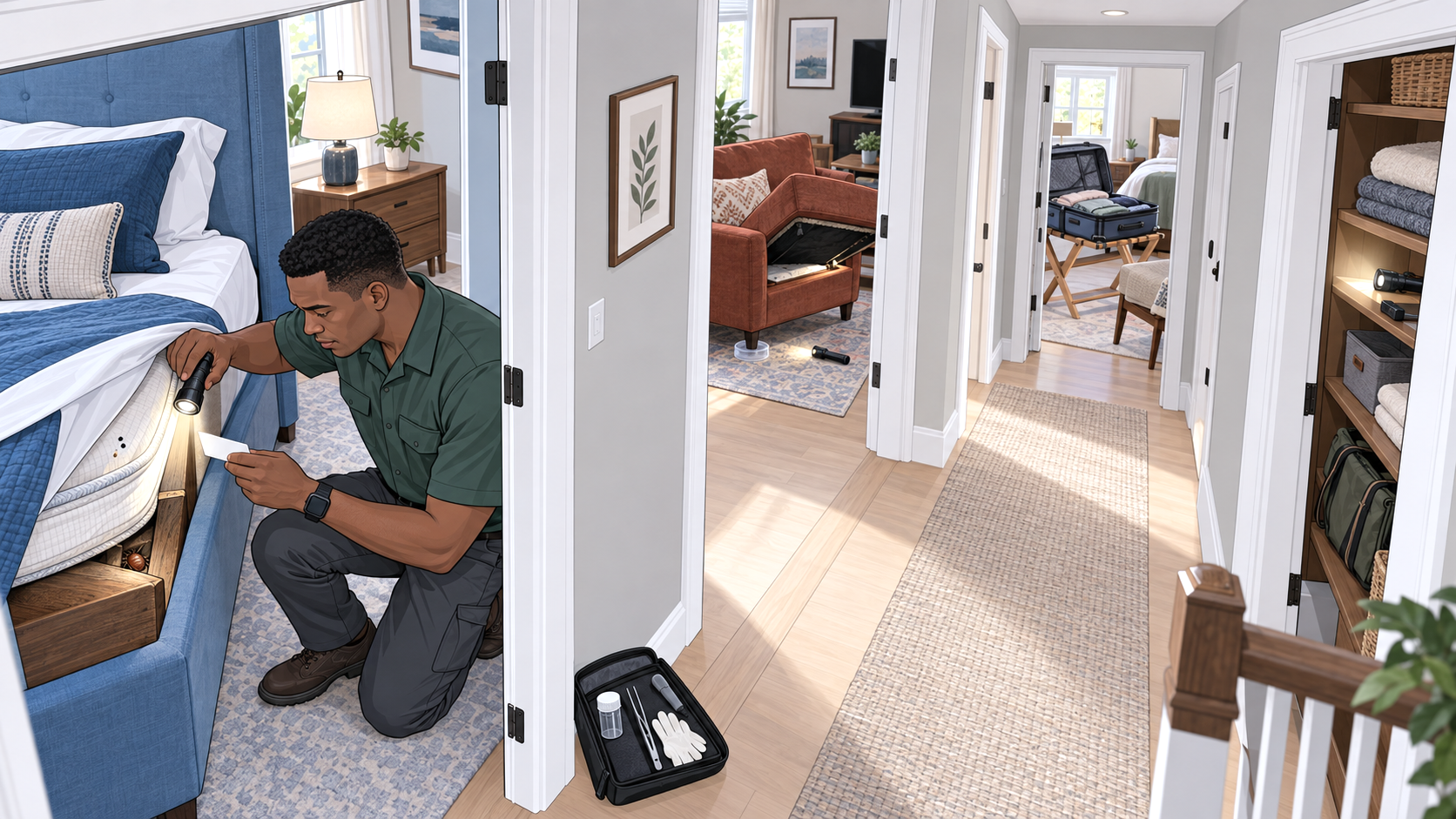
Checking a mattress is only the beginning of a thorough bed bug inspection. Bed bugs are strongly associated with sleeping and resting areas, so the bed deserves the closest attention first, but they can also hide in bed frames, furniture, baseboards, wall features, curtains, and other narrow spaces nearby.
The most efficient approach is to work outward from where people sleep or spend long periods resting. Start with the bed, then inspect nearby furniture and gradually expand the search if you find evidence or have strong reason to suspect an established infestation.
Start With the Mattress and Box Spring
The bed is the highest-priority inspection area. UC IPM reports that about 85% of bed bugs are found in or near the bed, which is why an inspection should begin with the mattress, box spring, bed frame, and headboard.
Remove the bedding and examine the mattress seams, piping, folds, labels, handles, and other narrow edges. Check every surface of the box spring as well, including underneath it. A detailed mattress inspection is particularly important when the infestation is still small.
You’re looking for live bugs, pale eggs and eggshells, shed skins, dark fecal spots, and rusty or reddish stains. Bite marks alone aren’t reliable enough to confirm an infestation.
Inspect the Bed Frame and Headboard
Once the mattress and box spring are clear, inspect the structure supporting them. The EPA identifies cracks in bed frames and headboards as common bed bug hiding places.
Pay close attention to joints, screw holes, brackets, grooves, gaps between pieces of wood, and the back of the headboard. Bed bugs can squeeze into extremely narrow spaces, so a frame that looks clean from the outside can still contain hidden harborages.
Some frames may need to be partially dismantled for a thorough inspection. Don’t damage furniture unnecessarily, but make sure you’re actually seeing the joints and concealed surfaces rather than checking only the exposed edges.
Move to Furniture Around the Bed
Next, inspect nightstands, dressers, chairs, couches, benches, and other furniture close to the sleeping area. Open drawers and examine their joints, corners, undersides, and the spaces behind the furniture.
For upholstered furniture, concentrate on seams, folds, cushion edges, zippers, and gaps in the frame. The EPA notes that bed bugs can travel 5 to 20 feet from established harborages to feed, so furniture doesn’t have to touch the bed to be relevant.
Dark spotting can be particularly useful around concealed harborages. Knowing what bed bug feces look like and how to recognize shed skins and casings makes these small traces easier to distinguish from ordinary debris.
Expand the Search to the Room Itself
If you find evidence away from the bed, or you’re dealing with a suspected established infestation, widen the inspection to structural hiding places.
Check along baseboards, carpet edges, wall-floor junctions, cracks, loose wallpaper, picture frames, wall hangings, and the junction between walls and ceilings. The EPA also lists electrical receptacles, appliances, and even screw heads among places bed bugs may hide in heavier infestations.
Use caution around electricity. Don’t insert tools into outlets or remove electrical components unless you know how to do so safely. If evidence suggests bed bugs are inside electrical fixtures or wall voids, that is a better job for an appropriately qualified professional.
Check Curtains and Other Fabric Hiding Places
Curtains and drapes are also worth inspecting when you’re expanding the search beyond the immediate bed area. Look closely at folds, hems, pleats, and areas where fabric gathers around curtain hardware.
Don’t assume that finding nothing on the curtains means the room is clear. These are secondary hiding places rather than the first place we would concentrate an inspection. The bed and furniture closest to the sleeping area remain the priority.
Use a Flashlight and Magnification
A bright flashlight makes a substantial difference because many harborages are too dark to inspect properly with normal room lighting. UC IPM also recommends a magnifying glass, which can help when examining tiny eggs, early nymphs, or suspicious debris.
A small mirror can help you see behind furniture and underneath surfaces without immediately dismantling everything. Work slowly enough to examine cracks and seams rather than simply shining the flashlight across them.
Bed bug eggs are only about 1 millimeter long, so they’re particularly easy to overlook. They are pale and attached to surfaces rather than loose like grains scattered around the room.
Which Rooms Should You Inspect?
Start with bedrooms and other places where people regularly sleep or remain sedentary for long periods, such as a couch used for sleeping. If evidence is found, expand the inspection into adjoining rooms and other areas where people regularly rest.
In apartments and other multi-unit buildings, bed bugs can also move between units through structural openings. A confirmed infestation may therefore require a broader inspection than a single bedroom, particularly when neighboring units could be involved.
A negative inspection doesn’t always prove that bed bugs are absent. Low-level infestations can be difficult to detect, so monitoring or professional inspection may be appropriate when suspicion remains strong despite finding no physical evidence.
Questions About Checking for Bed Bugs
How long should a bed bug inspection take?
There isn’t a reliable universal time. Room size, furniture, clutter, infestation level, and inspector experience all affect how long a proper search takes. A low-level infestation can actually require more patience because there is less evidence to find.
Should you check during the day or at night?
Either is fine for an inspection. You’re primarily looking for hidden bugs, eggs, fecal spots, and shed skins rather than waiting for bugs to emerge and feed. A flashlight and careful inspection matter more than the time of day.
What should you do if you find something suspicious?
Preserve an intact specimen when possible and have it correctly identified. If you still aren’t certain after inspecting the likely hiding places, confirm whether the evidence actually indicates bed bugs before beginning pesticide treatment.
16 thoughts on “How to Check Your Home for Bed Bugs, Room by Room”