
An earwig does not enter the garden looking for one particular meal. It may chew a flower petal, scavenge decaying vegetation and prey on a small insect during the same […]

Are Earwigs Good or Bad for Your Garden?
Finding earwigs beneath a flowerpot does not automatically mean something in the garden needs saving. The same insect that chews a hole through a dahlia petal can spend another night […]
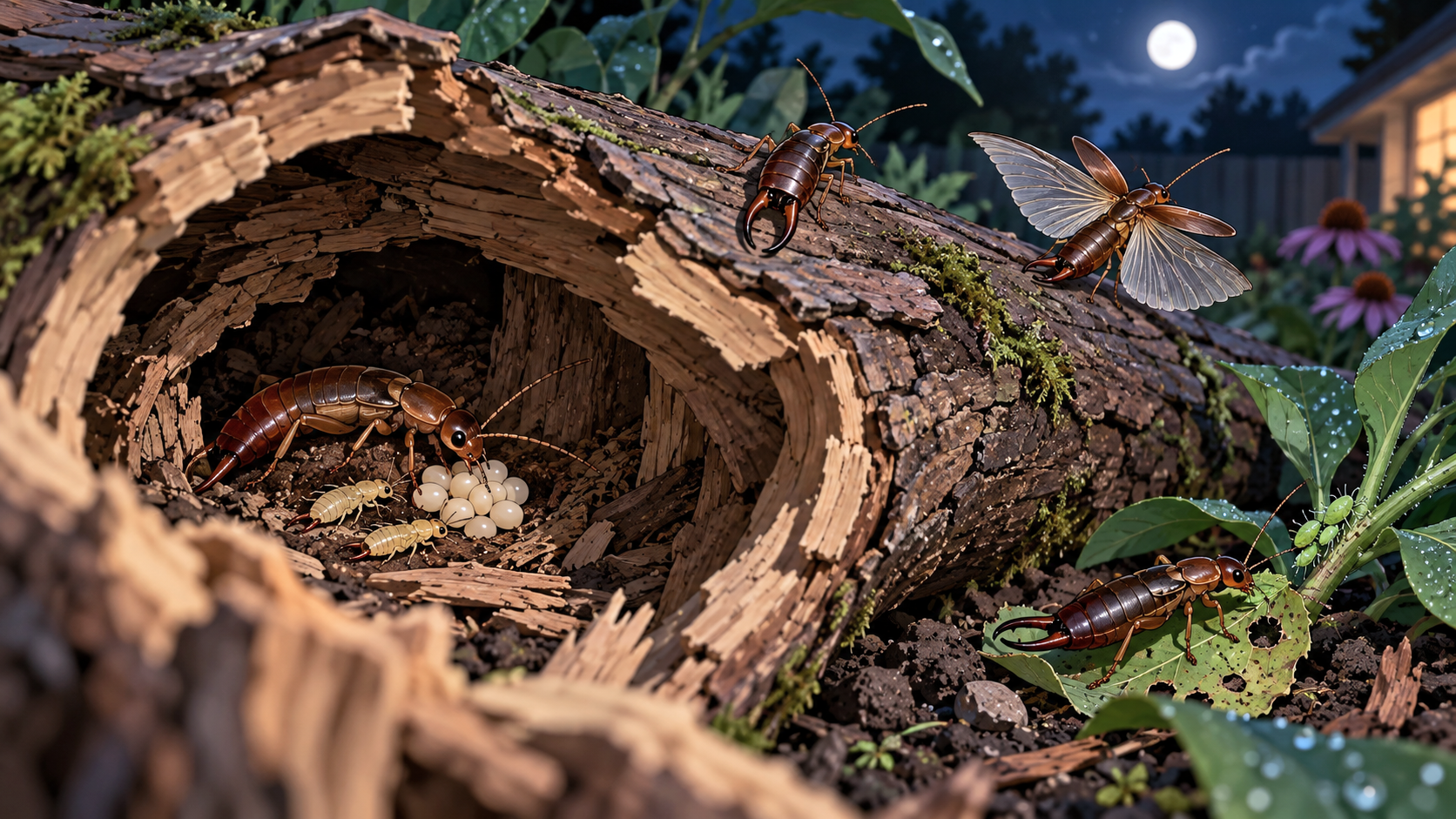
Interesting Facts About Earwigs
Earwigs are much stranger than the pincers on their rear suggest. They can have wings yet rarely fly, mothers actively care for their eggs and young, and some species release […]
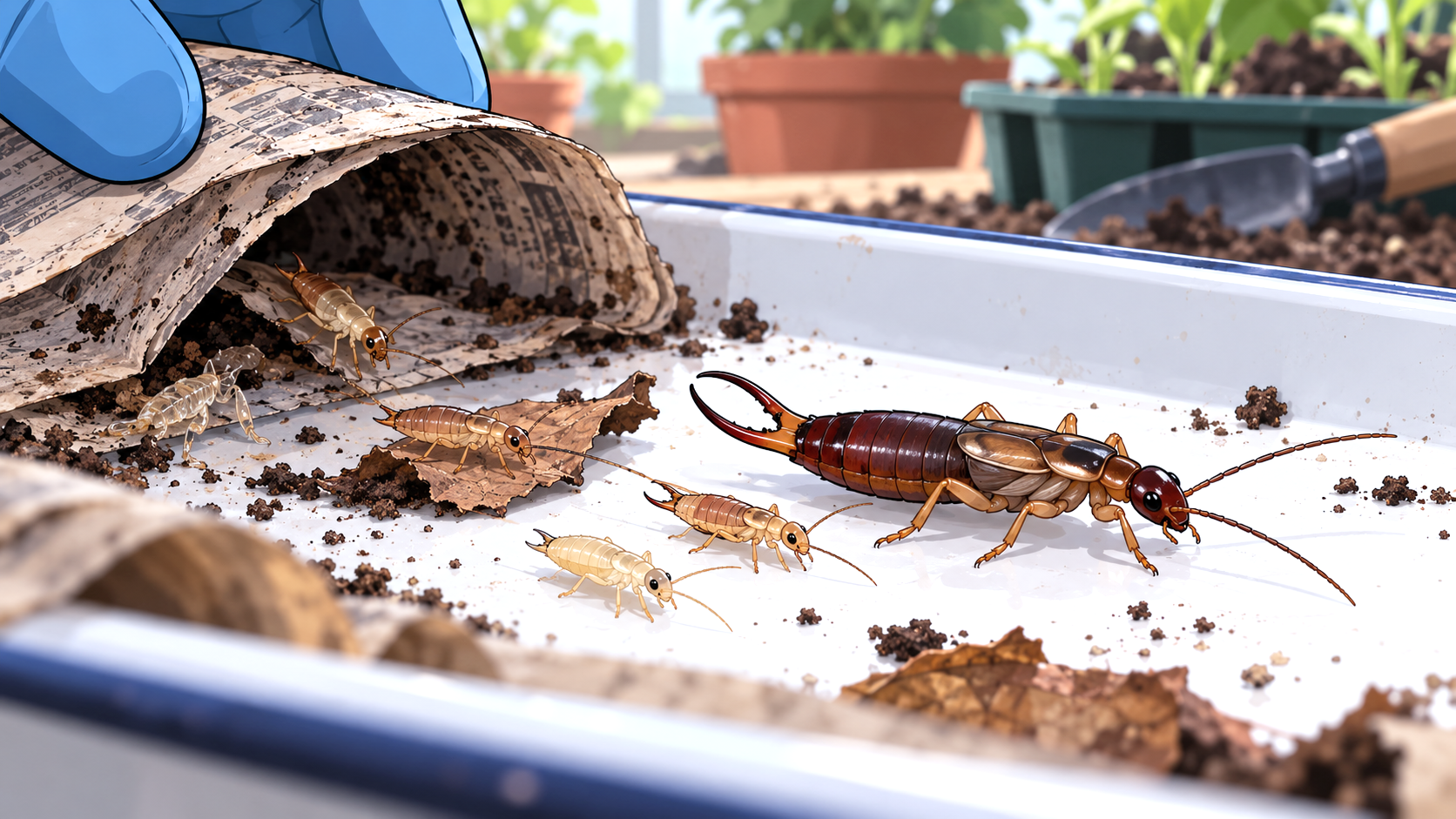
What Do Baby Earwigs (Nymphs) Look Like?
Baby earwigs, called nymphs, look like smaller and usually lighter versions of adult earwigs. They have elongated bodies, six legs, long antennae, and a pair of cerci at the rear. […]

What Attracts Earwigs to Begin With?
A yard can look perfectly tidy and still provide exactly what earwigs need. The attraction is often happening at ground level, where damp soil meets mulch, fallen leaves, flowerpots, dense […]
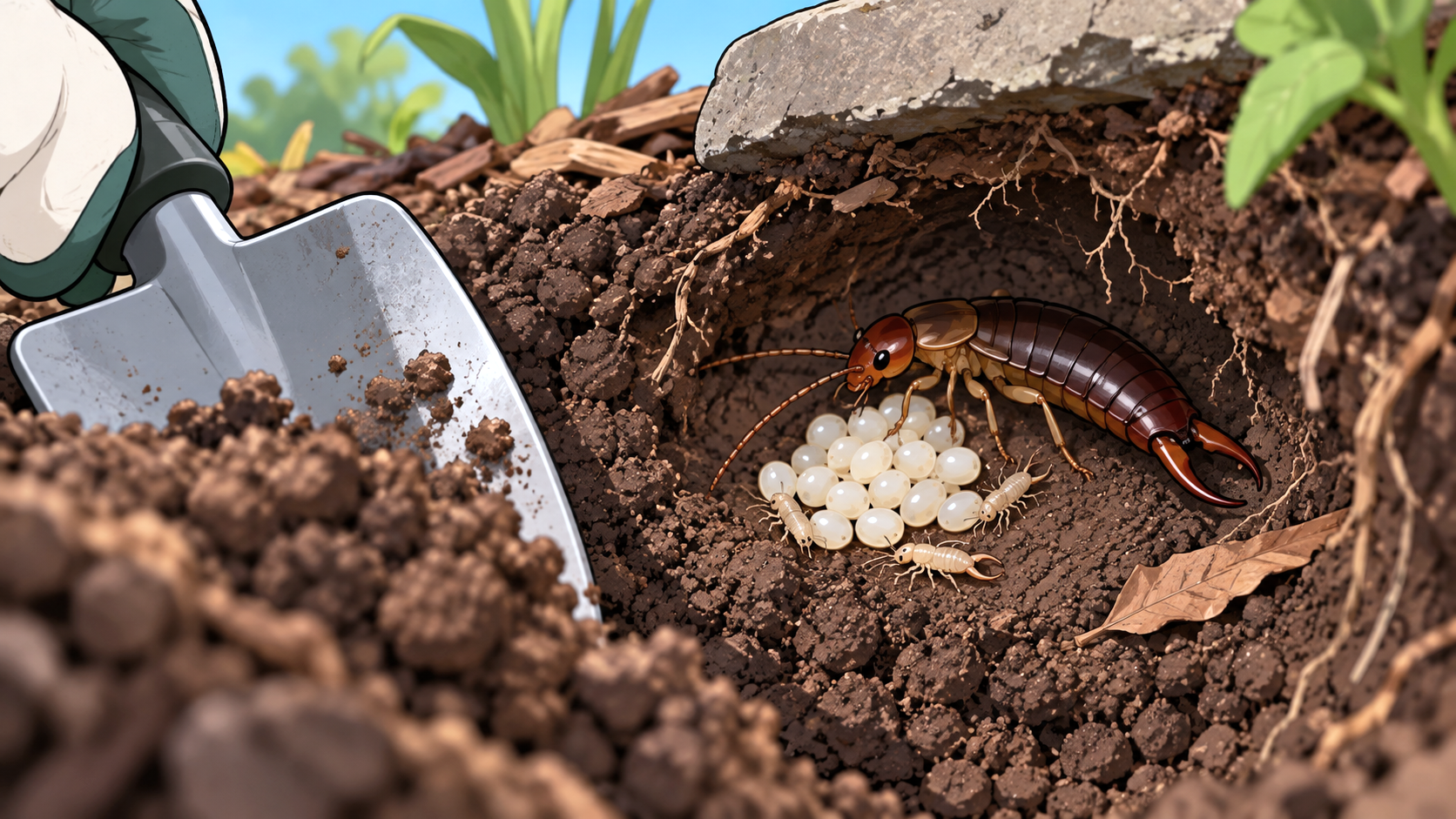
What Do Earwig Eggs Look Like?
Earwig eggs are tiny, elliptical, and pearly white when freshly laid. European earwig eggs are about 1 millimeter long, roughly pinhead-sized, and females lay them together inside protected soil nests. […]
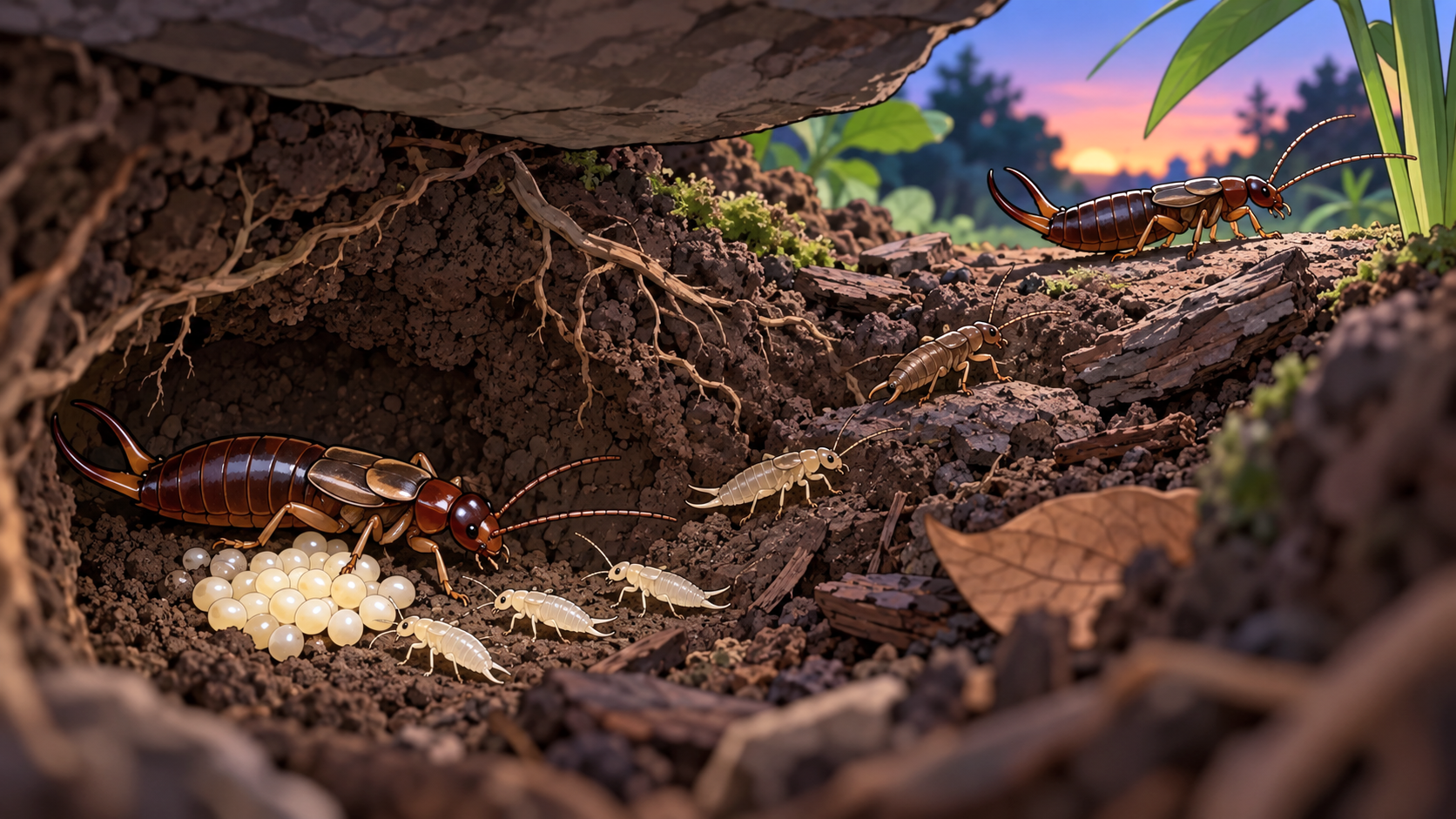
The Earwig Life Cycle: Egg to Adult
The earwig life cycle has three main forms: egg, nymph, and adult. European earwigs develop through gradual metamorphosis, so there is no caterpillar-like larva or pupal stage. After hatching, a […]
Are Earwigs Dangerous to Humans?
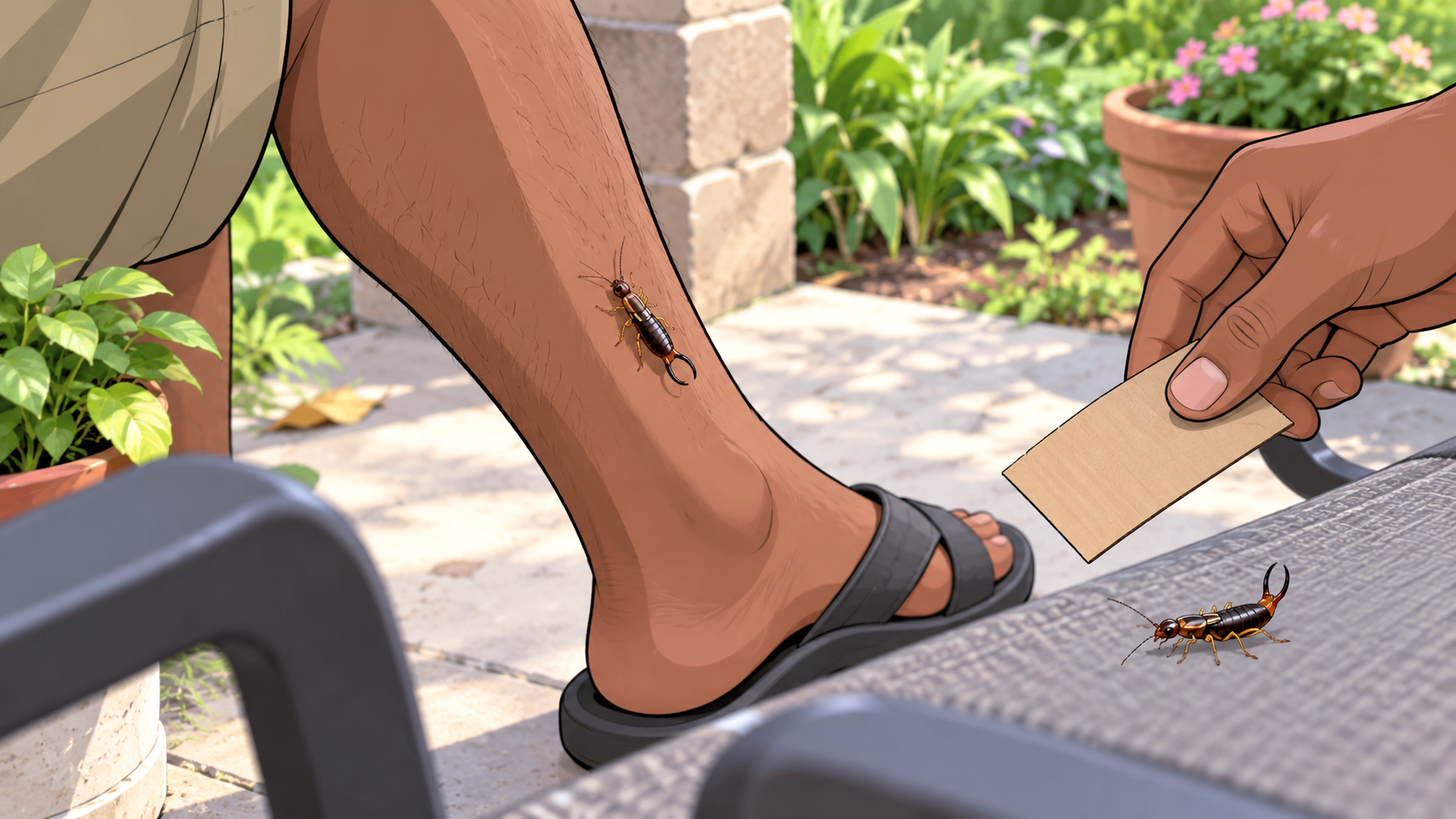
Those pincers make earwigs look considerably more threatening than they are. Earwigs are not considered dangerous to humans. They are not poisonous or venomous, and their pincers are not powerful […]
What Are Earwig Pincers Actually For?
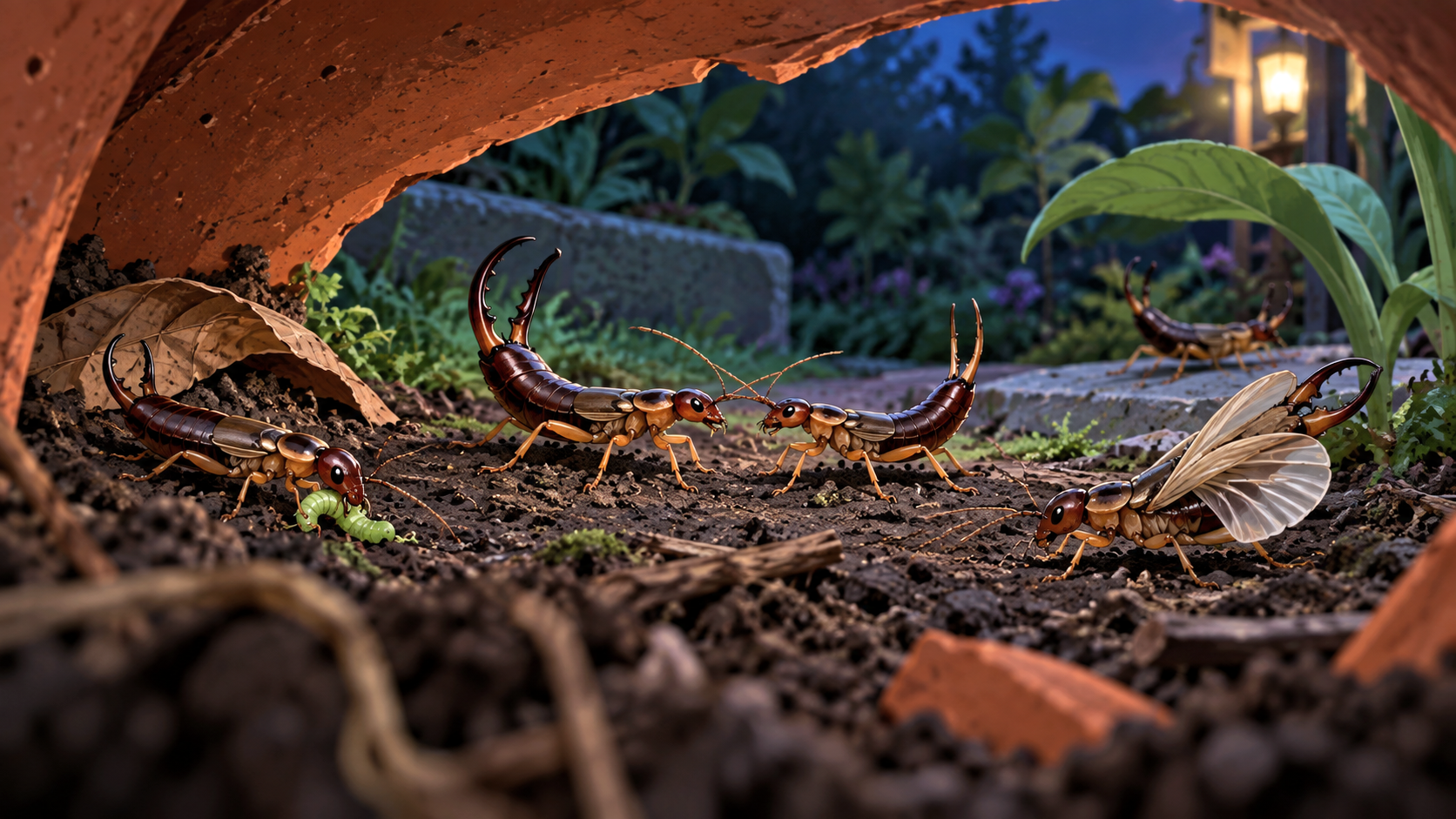
Earwig pincers are multipurpose structures used for defense, catching and holding prey, mating, and competition. Their proper name is cerci, and they sit at the rear of the abdomen rather […]
Do Earwigs Have Wings? Can They Fly?
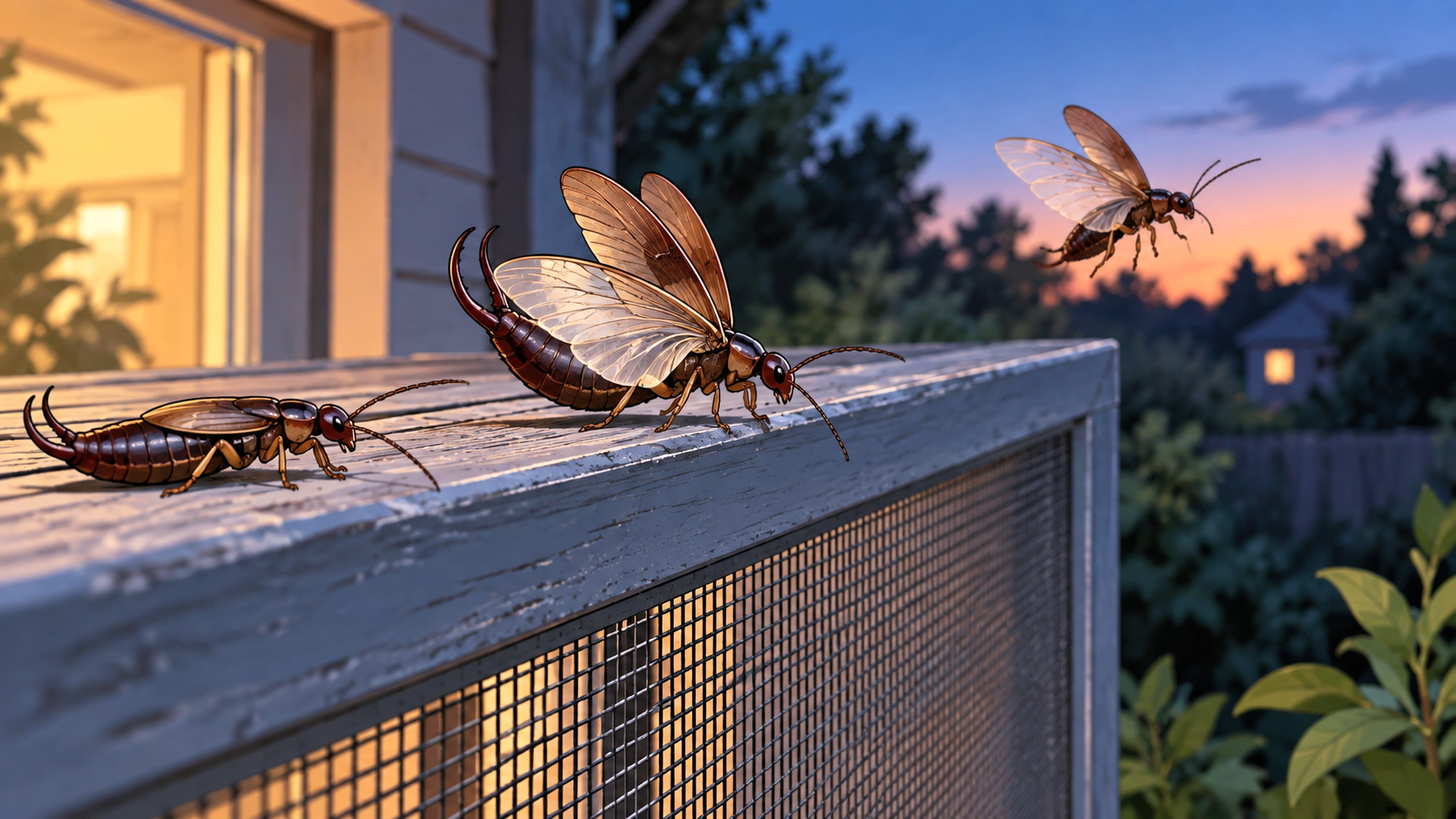
Yes, adult earwigs can have wings, and some can fly, but seeing one in flight is unusual. Most earwig species have a pair of short, leathery forewings covering much larger […]