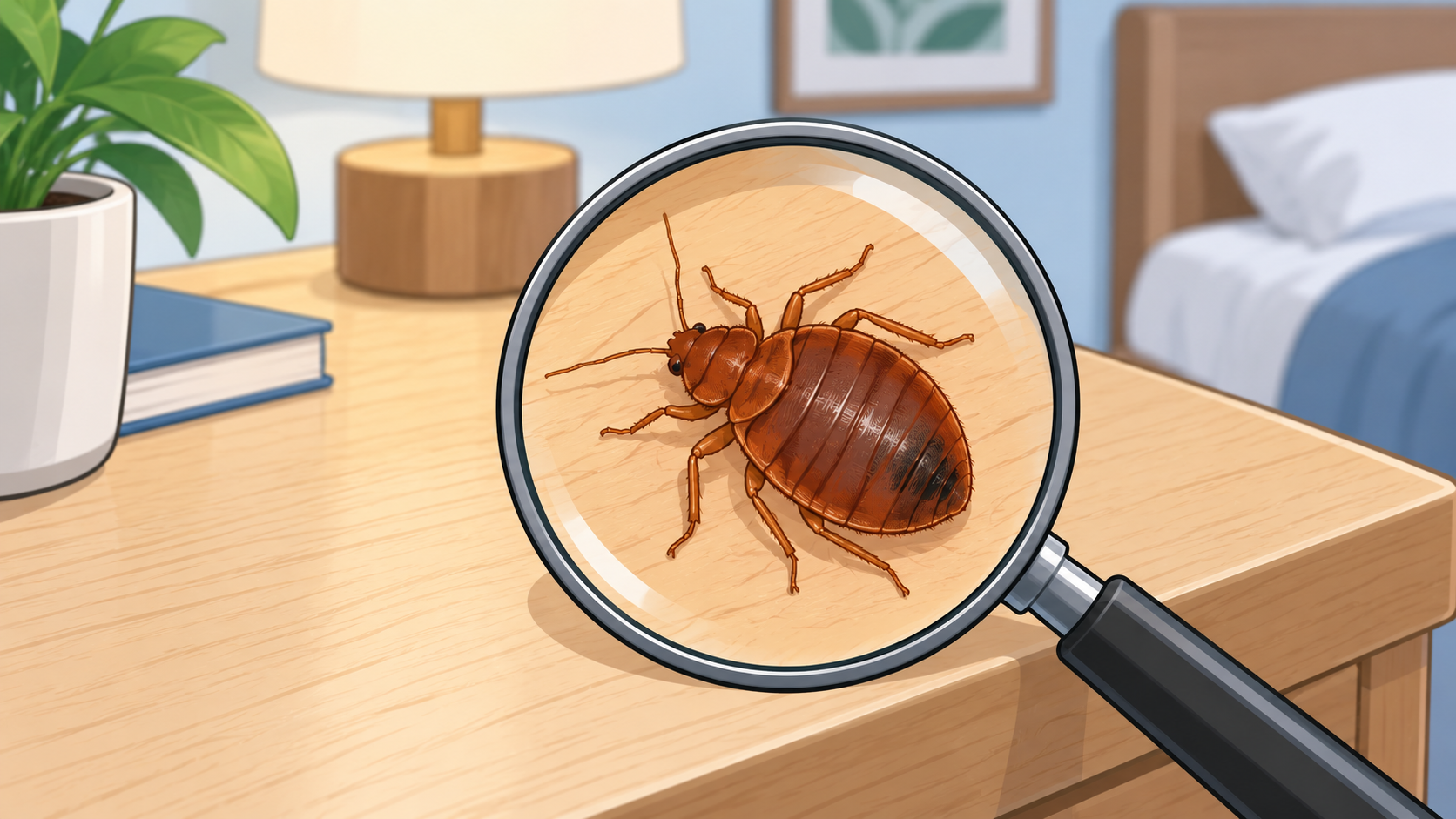
A bed bug is a flat, oval, reddish-brown insect roughly the size and color of an apple seed. An adult is usually about 5 to 7 millimeters long, while nymphs are smaller, paler, and can be nearly transparent when they’re newly hatched. The eggs are even easier to miss: tiny, creamy-white ovals about a millimeter long, closer to a grain of salt than what most people imagine when they think of an insect egg. One reason identifying bed bugs from pictures can be frustrating is that they don’t always look the same. Search for bed bug photos and you’ll see everything from dark, swollen insects that almost resemble tiny ticks to pale nymphs that barely look like bugs at all. Both can be bed bugs. Their appearance changes considerably with age and feeding status, so the dramatic close-up photo you see online isn’t necessarily what you’ll find along a mattress seam.
Adult Bed Bugs: Before and After a Blood Meal
An unfed adult bed bug is flat, brown, and oval, and that flattened body is one of the reasons these insects are so good at disappearing. It allows them to tuck themselves into narrow seams and joints around beds, furniture, and other areas where a casual inspection can easily miss them. After feeding, however, the body changes noticeably. According to Colorado State University’s agricultural entomology program, a fed adult becomes darker reddish brown and takes on a rounder, more elongated appearance. Instead of looking like a flat seed, it starts looking more like a tiny football. A recently fed bug is also less flat and flexible, which can make it easier to spot before it gets back into a protected hiding place.
Male and female bed bugs look very similar unless you’re examining them closely. Both have six legs, no functional wings, a small head with two short antennae, and a feeding structure called a proboscis that folds underneath the body when it isn’t being used. The EPA’s own appearance and life cycle page shows the same difference between fed and unfed bed bugs with reference images that can be useful when comparing them with something you’ve found. If you’re having trouble judging their size from photographs, we’ve compared them with familiar objects in exactly how big a bed bug is compared to a grain of rice, a tick, and a pinhead, and we’ve covered the changes in coloration more closely in what color bed bugs actually are and why that changes so much.
What the Eggs Actually Look Like
Bed bug eggs are one of the easiest stages to overlook during an inspection. They’re creamy white, oval, and roughly one millimeter long, so an individual egg can easily be mistaken for a grain of salt, a tiny piece of lint, or a fleck of dandruff. The important difference is where and how you find it. Female bed bugs attach their eggs to surfaces, often inside the same protected cracks, seams, and folds where adults and nymphs spend their time. That means you usually have to inspect those hiding places closely rather than expecting to see loose eggs scattered across the top of a mattress.
Tennessee’s bed bug extension program notes that the eggs typically hatch within six to ten days. Until you know what you’re looking for, they’re extremely easy to pass over, especially against pale fabric. A flashlight aimed across a surface rather than directly down at it can make small objects and eggs easier to notice because of the shadows they cast. We’ve covered their appearance and the places worth checking more closely in what a bed bug egg looks like and where they’re usually hidden.
The Five Nymph Stages, From Pinhead to Adult-Sized
A newly hatched bed bug nymph has the basic shape of an adult, but its appearance can be dramatically different. It’s tiny, pale, and nearly translucent, which makes early-stage nymphs some of the easiest bed bugs to overlook. As the nymph feeds and develops, it molts five times before becoming an adult. With each stage it becomes larger and generally darker, gradually taking on the reddish-brown appearance most people associate with a mature bed bug.
| StageApproximate lengthColor | ||
|---|---|---|
| Egg | 1 mm | Creamy white |
| 1st instar | 1.5 mm | Nearly translucent, pale |
| 2nd instar | 2 mm | Pale yellowish white |
| 3rd instar | 2.5 mm | Light tan, faint color after feeding |
| 4th instar | 3 to 3.5 mm | Yellowish brown |
| 5th instar | 4.5 to 5 mm | Brown, close to adult shade |
| Adult | 5 to 7 mm | Reddish brown |
These figures come from Colorado State University’s and Penn State University’s extension entomology programs. The practical complication is that size and color aren’t the only things changing. A recently fed nymph can look noticeably darker and fuller than an unfed nymph at the same stage because the blood meal is visible through its relatively thin body. That’s why two photographs of bed bugs at essentially the same developmental stage can look surprisingly different. If you’re trying to distinguish one stage from another, we’ve gone through the progression in identifying which nymph instar you’re actually looking at, along with the appearance of a recently fed nymph in what a bed bug looks like right after it’s fed.
The Visual Details That Actually Separate Them From Look-Alikes
General shape and color can get you fairly close when identifying a bed bug, but they aren’t always enough. Several related insects look remarkably similar, and some of the features that actually separate them are much smaller than anything you’re likely to notice from across the room. When identification really matters, there are a couple of details worth examining more closely.
The first is the pronotum, the plate immediately behind the head. On a true bed bug, it has short fringe hairs along its edge, and Colorado State’s extension program confirms that these hairs are shorter than the width of the insect’s eye. Bat bugs, one of the easiest relatives to confuse with bed bugs, have noticeably longer hairs in the same area. This isn’t a difference we’d expect most homeowners to identify confidently without magnification, which is why the circumstances surrounding the insect matter too. If there are bats living in an attic, chimney, or wall void, for example, an insect that looks exactly like a bed bug deserves a closer examination before treatment begins. We cover that distinction in bat bugs versus bed bugs and the one visual detail that tells them apart.
The second useful detail is antenna proportion, which can help distinguish bed bugs from swallow bugs, another close relative associated with swallow nests. Colorado State’s extension program notes that the final antennal segment of a bed bug is noticeably shorter than the segment immediately before it, while the final two segments on a swallow bug are much closer in length. Again, this is the kind of distinction that usually requires magnification rather than a quick phone photo. That’s why we wouldn’t rule bed bugs in or out solely from a blurry picture taken across a room. If you’re dealing with a particularly close look-alike, we’ve covered this comparison in swallow bugs versus bed bugs, and why the antennae are the tell.
What Their Waste and Shed Skins Look Like
You don’t necessarily have to find a live bed bug to find evidence of an infestation. In fact, the signs they leave behind are often easier to locate because they remain in place after the bugs have moved back into their hiding spots. Fecal spotting is one of the more useful signs to check for. These marks usually appear as small, dark dots or smears around mattress seams, box springs, bed frames, headboards, or nearby surfaces. They’re produced from digested blood and can look a little like someone touched the material with the tip of a black pen.
Cornell’s Integrated Pest Management program recommends checking suspicious spotting with a damp tissue. Bed bug fecal material can smear into a rusty reddish-brown color when dampened, which can help distinguish it from ordinary dirt or some other marks. It still needs to be considered alongside the rest of the evidence in the room rather than treated as absolute proof by itself. We’ve gone through the different appearances of these marks in what bed bug fecal spots actually look like and how to tell them from other stains.
Shed skins are another important clue. They’re pale, papery, hollow versions of the nymph that left them behind and can be easy to mistake for debris when they’re tucked into a mattress seam or furniture joint. Because a bed bug molts five times before reaching adulthood, an active infestation can leave multiple shed skins behind as the population develops. Finding these skins without seeing a live bug doesn’t automatically mean the infestation is gone. The insects may simply be hiding somewhere else nearby while the old exoskeletons remain behind. If that’s what you’ve found, we explain what it can mean in what it means when you find shed bed bug skins but no live bugs.
The Mistake People Make Reading Photos Online
One of the easiest ways to misidentify bed bugs is to expect every specimen to look like the classic close-up photograph you saw online. Those images often show mature, well-lit adults photographed at high magnification, sometimes shortly after feeding. That’s useful for seeing anatomical details, but it can give you a distorted idea of what a bed bug will actually look like when you find one crawling along a mattress seam or tucked into a bed-frame joint.
A pale first-stage nymph can look completely different from a dark, recently fed adult even though they’re the same species. Lighting makes another difference, as does whether the bug has recently eaten. So if the insect you’ve found doesn’t look as large, dark, or dramatic as the bed bugs in online photographs, don’t use that alone as evidence that it isn’t one. Size, body shape, feeding state, developmental stage, location, and the other evidence around it all matter when making an identification.
How To Check Them Out
Start with a flashlight and inspect the places bed bugs actually use rather than just looking across the exposed surface of the mattress. Check mattress seams and piping, the underside and edges of the box spring, bed-frame joints, the area around the headboard, and other narrow gaps close to where someone sleeps. Your phone’s macro or close-up camera mode can also help if the insect is too small to examine comfortably with the naked eye.
When you photograph something suspicious, put a familiar object beside it for scale. A measurement in millimeters is even better, but a grain of rice, pinhead, or similarly familiar reference can still be more useful than trying to remember how large a bed bug is supposed to be. If the insect is close but you can’t confidently identify it, keep the specimen if possible or take several clear photographs and have it examined by a pest control professional or local extension office. Guessing from one blurry search-engine image is a poor basis for deciding whether your home needs bed bug treatment.
Frequently Asked Questions
Can bed bugs be black instead of brown?
Not typically. Bed bugs range from very pale or nearly translucent in the earliest nymph stages to reddish brown as adults. A recently fed bed bug can appear extremely dark because the blood meal is visible through or affects the appearance of the abdomen, especially in younger stages. That can make the insect look almost black under some lighting. A bug that’s consistently jet black, shiny, and otherwise doesn’t match the body shape of a bed bug is more likely to be another type of insect, so color should always be considered together with size and shape.
Do bed bug eggs really look like dandruff?
At a quick glance, they can. Both are tiny and pale enough to disappear against light-colored bedding, which is one reason bed bug eggs are so easily missed. The more useful difference is that bed bug eggs are attached to the surface where they’ve been laid rather than sitting loosely like ordinary flakes of skin or lint. If a suspected egg simply brushes away, that gives you a reason to look more closely before assuming you’ve found evidence of bed bugs.
Why do some bed bug photos show a bug with visible stripes or bands?
The banded appearance is usually more noticeable in nymphs because their bodies are thinner and more translucent. After feeding, the blood inside the abdomen can remain visible through parts of the body, making the abdominal segments look like darker bands. As the insect develops and becomes more opaque, and particularly when an adult is fully fed and swollen, that segmented appearance can become much less obvious. That’s another reason color and markings alone aren’t reliable enough to identify a bed bug without considering its size, shape, developmental stage, and feeding status.
27 thoughts on “What Do Bed Bugs Look Like? A Visual Guide”